Why the Talking Stage Always Stalls
- Jan 9
- 4 min read
You've been texting for three weeks. The conversations are good — sometimes great. You've met once or twice and the energy was undeniably there. But nothing is progressing. Nobody's naming it. Nobody's escalating. The whole thing feels suspended in a holding pattern where both of you are simultaneously interested and frozen.
Then, eventually, it just dissolves. Not with a dramatic ending — with a slow fade that neither person initiated but both participated in.
You'll tell your friends it "just didn't work out." But if you're honest, you have no idea what actually happened. And worse, this is the third time in a year that a promising connection has stalled at exactly the same stage.
The talking stage isn't the problem. Your pacing architecture is.
Two Speeds, One Relationship
In BaZi, every person's chart has what we might call a thermal profile — a baseline operational temperature that governs how quickly they move in relationships. This isn't personality. It's elemental climate.
Charts with strong Fire energy and a warm-dry climate are forward-moving by default. They know what they want relatively quickly, they initiate, they text back fast, they lock in plans. Their attraction style is visible and action-oriented — showing up, doing things, making their interest legible.
Charts with strong Water or wet Earth energy and a cool-damp climate are deliberate. They process attraction through layers of assessment before releasing it. They're interested — sometimes intensely — but their system needs to complete a security scan before it allows closeness. Their attraction style is underground: they pay close attention, remember small details, and choose to stay. But from the outside, this reads as ambiguity.
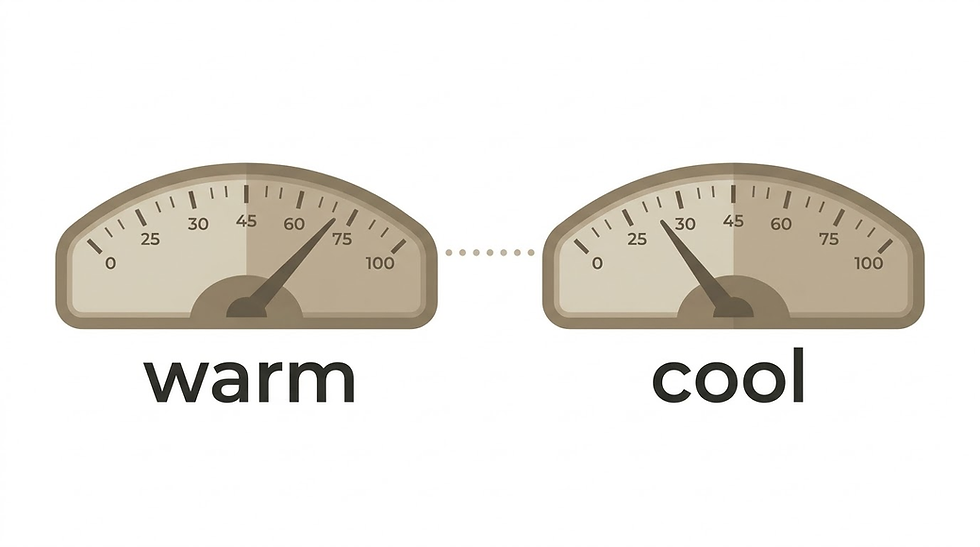
When a warm chart meets a cool chart, the talking stage becomes a structural stress test. The warm person feels the cool person is dragging their feet. The cool person feels the warm person is rushing. Both are right, from their own thermal perspective. And both feel unheard.
What the Spouse Palace Reveals About Pacing
The pacing gap isn't random. It maps directly to the Spouse Palace — the structural seat in each person's chart where relationship energy is processed.
A Spouse Palace that's elementally comfortable (same element as the Day Master, or a supporting element) produces a relationship seat that defaults to patience and self-containment. This person doesn't panic when things move slowly. They're fine on their own. The risk is that they're too fine on their own — they can accidentally communicate indifference when they're actually just operating at their natural pace.
A Spouse Palace that's elementally tense (a controlling or pressuring element, like Seven Killings) produces a relationship seat where closeness inherently triggers the guard system. This person might feel a powerful pull toward you, but their system processes that pull through a security checkpoint before it releases trust. From the inside, this feels like careful discernment. From the outside, it looks like the talking stage stalling.
Now imagine both patterns in the same dynamic. Person A's Spouse Palace is comfortable — they're patient and present but not urgent. Person B's Spouse Palace is tense — they're attracted but running a security protocol. Neither person is disinterested. But the structural mismatch in their pacing creates a gap where both people are waiting for a signal from the other that never arrives in the expected form.
The Pacing Gap Is Actually Good News
Here's the counterintuitive truth: easy attraction fades. Structural attraction compounds.
When two charts have a genuine elemental pull — stem combinations that lock their systems together, climate differences that complement rather than clash, spouse palace interactions that create magnetic draw — the talking stage will almost always feel harder than it "should." That's because structural compatibility creates real tension alongside real chemistry. The attraction is there, but the architecture requires each person to adjust their natural pace to meet the other.
Relationships that start effortlessly often lack the structural depth to sustain difficulty later. Relationships that require deliberate pacing in the beginning — where both people have to consciously bridge a thermal gap — tend to build a stronger foundation, because the bridge itself becomes part of the relationship's infrastructure.
The question isn't "why is this stalling?" The question is "what's the structural reason for the pace, and is it worth building the bridge?"
How to Unstall Without Forcing It
If you're in a talking stage that feels stuck, the most productive move is to name the dynamic plainly.
Not "where is this going?" — that's a pressure question that triggers the exact security protocol you're trying to get past. Instead, something like: "I want you to know I'm interested and I'm not going anywhere. I don't need you to match my pace — I just want to know we're building the same thing."
This sentence does three things: it makes your interest explicit (which a warm chart needs to do, because cool charts don't assume), it removes the pressure to escalate on a timeline (which a cool chart needs to feel safe), and it reframes the dynamic from "who texts first" to "what are we building."
If the other person has genuine structural interest, this will unlock the next phase. If they don't, you'll know — and you'll know it weeks earlier than you would have by continuing to float in the talking stage purgatory.
A BaZi Compatibility Reading maps both people's thermal profiles, spouse palace interactions, and pacing architecture — showing you exactly where the speed differential is and what bridges it.


Comments